Audio devices
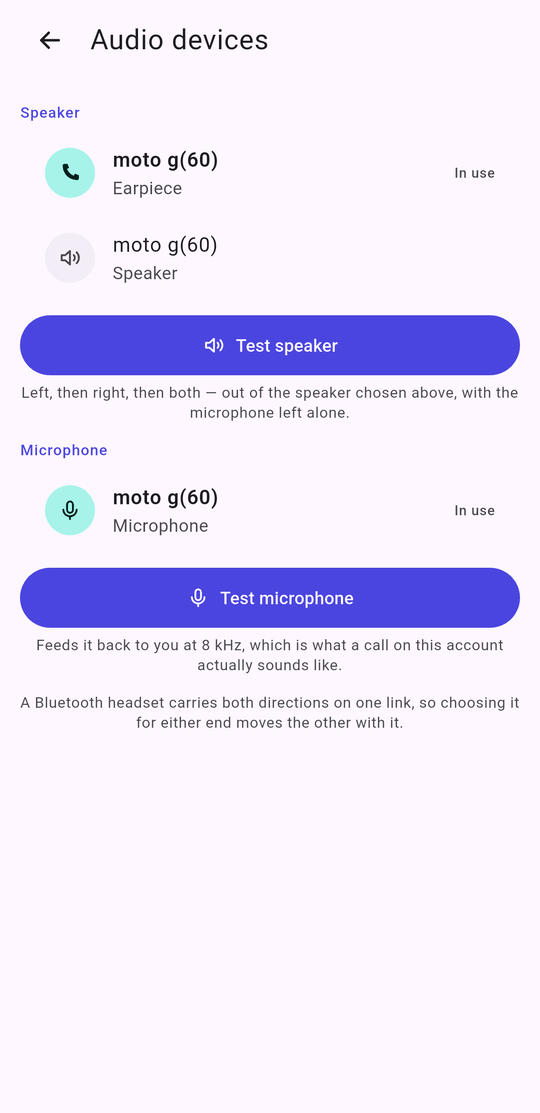
- Test speaker plays left, then right, then both, out of the speaker chosen above, with the microphone left alone.
- Test microphone feeds you back at 8 kHz, which is what a call on this account actually sounds like. It is deliberately not flattering.
A Bluetooth headset carries both directions on one link, so choosing it for
either end moves the other with it. The screen says so rather than letting you
set an impossible pair.
The SIP log
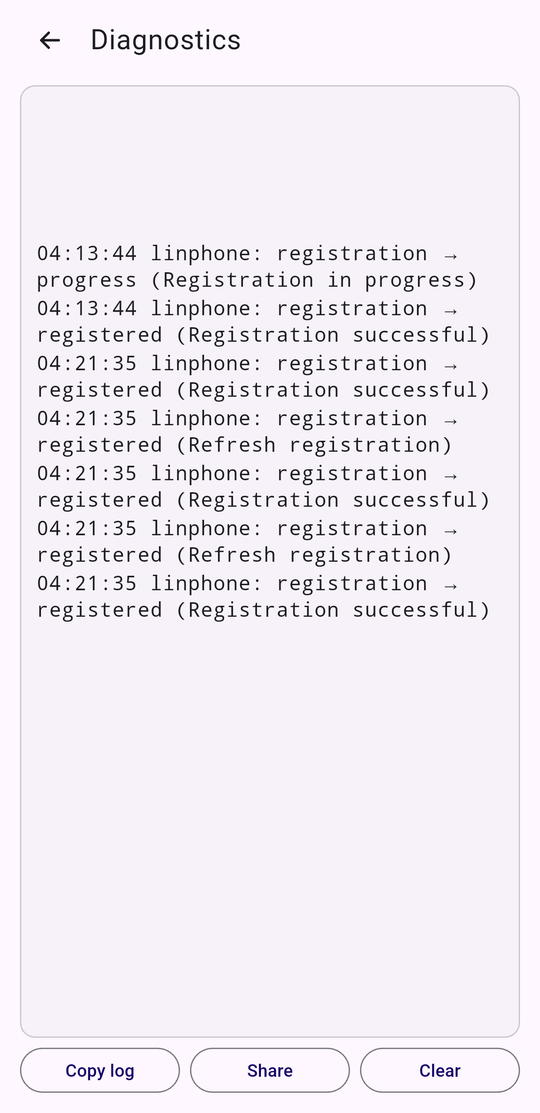
Authorization and digest headers are stripped before anything is written
down, so a log you send does not carry your password. The log is kept in the
app’s own storage rather than in Files, and Clear deletes it from disk as
well as from the screen.
Reading it
Most faults announce themselves plainly.
A call that reaches the in-call screen carries its own diagnosis: the quality
pill names the codec that won, the round-trip time, and the signal. A call that
sounds bad with 40 ms and four bars is not a network problem.